A Softer Way to Ask for More Help at Home
Family Care Conversations
A practical guide for starting the care conversation without making your loved one feel cornered.
If you are starting to notice that your loved one needs more help at home, you may already know the practical problem. Bathing is harder. Meals are less consistent. Appointment days take more out of everyone. The harder part may be finding the words to say it without making your loved one feel judged, pressured, or afraid of losing control.
Promise Senior Solutions works with San Antonio families who are trying to protect both safety and dignity. A good care conversation does not have to start with a big announcement. Often, it starts with one calm sentence: "I know staying at home matters to you. I want that too. Can we talk about a little support with the parts of the day that are getting harder?"
Direct answer: The best way to ask an aging parent or loved one about more help at home is to begin with what they value, Name one specific routine that is becoming difficult, and offer support as teamwork rather than control. Keep the conversation practical, respectful, and focused on helping them remain comfortable at home whenever possible.
Why This Conversation Feels So Hard
Many families wait because they do not want to embarrass a parent, spouse, or relative. They may also worry that mentioning care will sound like a threat to independence. Those worries are understandable. Home is personal. Daily routines are personal. Needing help with those routines can feel vulnerable.
The National Institute on Aging notes that it is not always obvious when an older adult needs help, and that some people may not want to admit they are struggling. That is why the tone of the conversation matters. A softer approach can help your loved one hear concern instead of criticism.
1. Start With Their Goal, Not Your Worry
Before you list what has changed, name what you both want. For many older adults, that goal is simple: they want to stay at home, keep familiar routines, and feel respected.
You might say:
"I know home is important to you."
"I want you to feel comfortable here."
"I am not trying to take over. I want us to make the day feel easier."
This helps shift the conversation away from blame. You are not saying, "You cannot manage." You are saying, "Let us protect what matters."
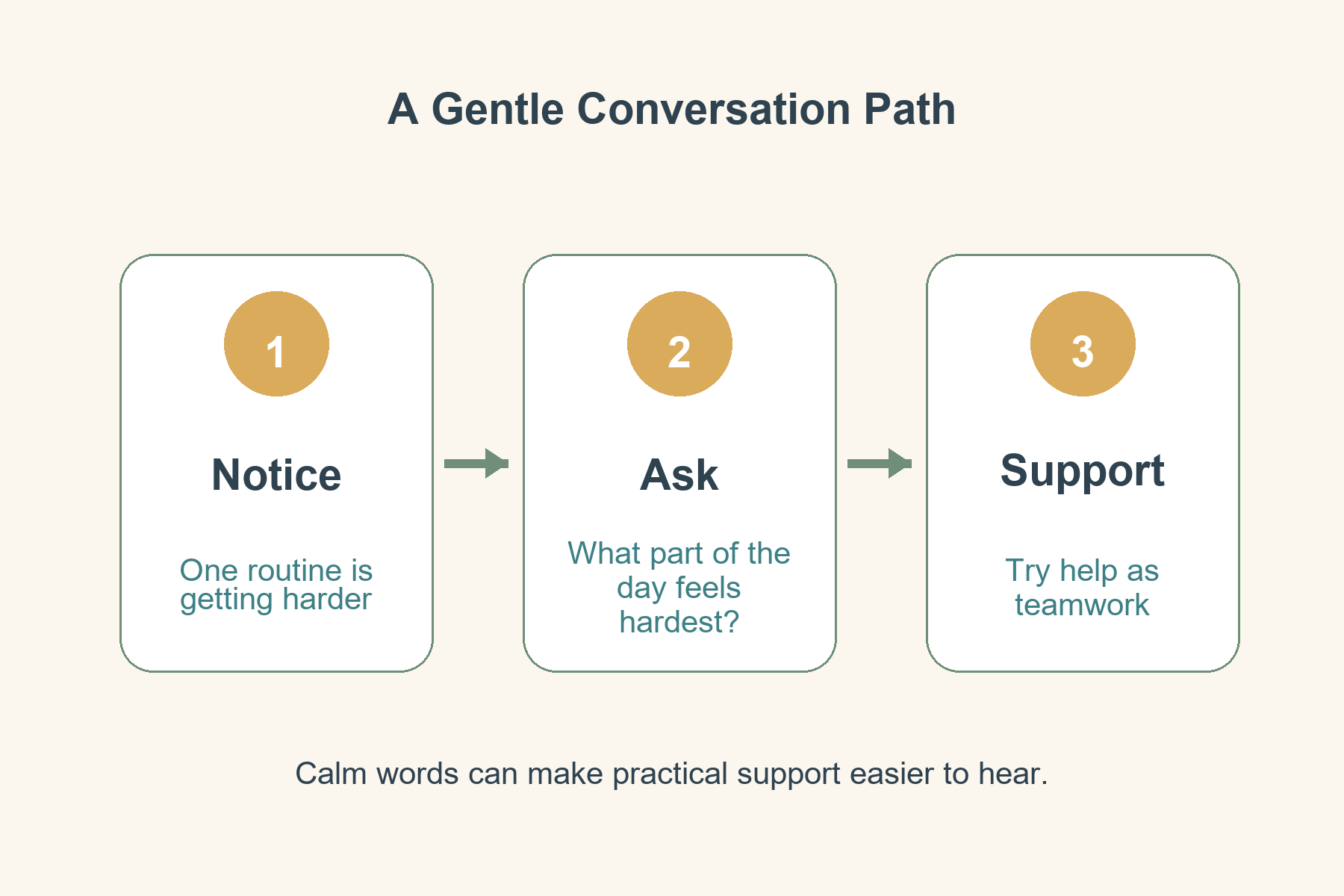
2. Name One Specific Routine That Is Getting Harder
Big phrases like "you need care" can feel overwhelming. They also make it easy for the conversation to become defensive. A better place to start is one routine you have actually noticed.
For example:
"Shower days seem more tiring lately."
"Appointments are taking most of the day now."
"You have mentioned being worn out by laundry and meals."
"I am worried that I cannot be here as often as I need to be."
Specific examples give your loved one something concrete to respond to. They also help the family match support to the real need, instead of guessing from a long list of care options.
3. Ask Before You Offer Solutions
A calm question can open the door. The National Institute on Aging recommends talking about concerns without sounding critical and asking direct, practical questions when you notice possible signs that someone needs extra support.
Try questions such as:
"What part of the day feels hardest right now?"
"Would it help if someone came by for a few hours?"
"Would help with rides, meals, or bathing make the week feel easier?"
"What would you want support to look like if we tried it?"
Then listen. Your loved one may be afraid of losing privacy. They may worry about cost. They may not want a stranger in the home. You do not have to solve every concern in one conversation. The first step is understanding what feels hardest to them.
4. Offer Help as a Trial, Not a Permanent Label
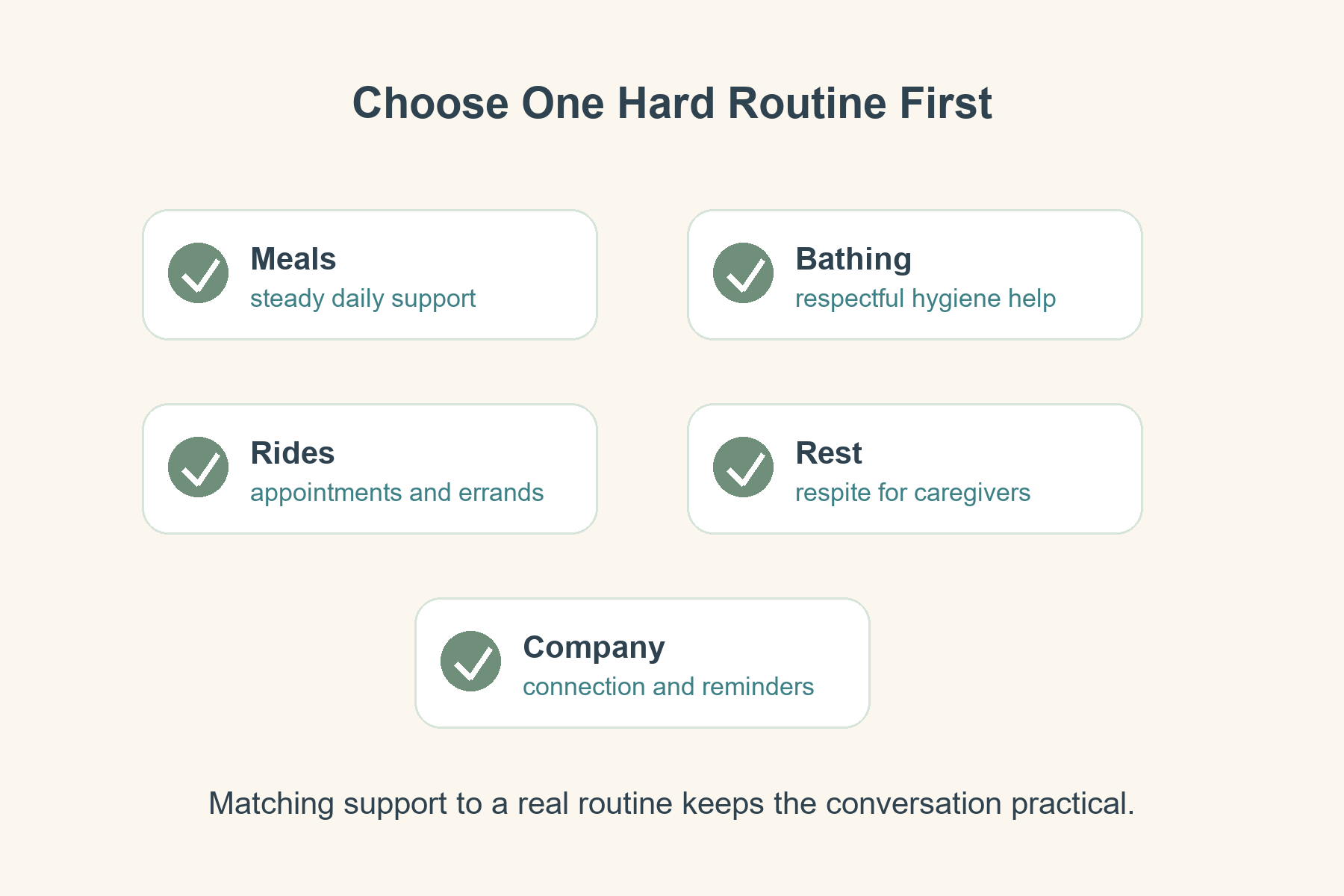
Sometimes families avoid care because the word feels too big. But support at home can begin in a small practical way. It may be companionship, help with bathing and hygiene routines, respite care so a family caregiver can rest, transportation to appointments, dementia care support, or return-to-home support after a hospital or rehab stay.
You might say:
"What if we tried help once or twice and then talked about how it felt?"
"We can start with the part of the week that feels hardest."
"This does not have to replace family. It can give the family backup."
That trial mindset can make the conversation less intimidating. It gives your loved one a way to participate in the decision instead of feeling like the decision has already been made.
5. Include the Family Caregiver in the Plan
The conversation is not only about the older adult. It is also about the person carrying the schedule, the worry, and the backup plan. The CDC reminds caregivers that caregiving can be hard and that consistent breaks from caregiving responsibilities matter.
If you are the daughter, spouse, or family member doing most of the coordinating, it is okay to say that the current routine is becoming too much to manage alone. Say it without guilt and without accusation:
"I want to keep helping, but I need backup."
"I am worried I will miss something if we do not build more support around this."
"I think a care plan would help all of us breathe a little."
Asking for help does not mean you are stepping away. It can mean you are trying to keep care steady, respectful, and realistic.
What Kind of Help Can Families Talk About?
For San Antonio families, Promise Senior Solutions can talk through several flexible in-home care options, depending on what is actually becoming difficult. The right fit may include:
Companion care for conversation, shared activities, reminders, light support, and connection.
Bathing and hygiene care when personal routines need respectful hands-on help.
Respite care when a family caregiver needs time to rest and recharge.
Dementia care when cognitive changes require a more specialized, personalized approach.
Not every family needs the same plan. A free, no-obligation consultation can help clarify what kind of support may fit your loved one, your home, and your family routine.
Quick Questions Families Often Ask
Should I wait until my loved one agrees completely?
Not always. You may need more than one conversation. Unless there is an urgent safety issue, it often helps to keep the first talk focused on listening, naming concerns gently, and exploring small next steps.
What if my parent says they do not need help?
Try narrowing the discussion to one routine. Instead of debating whether they need care, ask whether shower days, meals, errands, laundry, or appointments feel harder than they used to.
How can I make support feel less intrusive?
Start small when possible. Frame support around comfort, routine, and family backup. Ask what would make a caregiver visit feel respectful and useful.
Getting Started Is Easier Than You Think
You do not have to have the perfect words. You do not have to decide everything in one talk. Start with dignity. Start with home. Start with one routine that is becoming harder.
If your family is unsure what kind of in-home support makes sense, Promise Senior Solutions can help you talk through the options. A free, no-obligation consultation can give you a clearer next step for your loved one and your family.