When Walking Around at Home Starts Feeling Harder
A practical guide for families noticing small mobility changes before they become a bigger daily concern.
If you are starting to notice that your loved one moves more slowly around the house, pauses before standing, reaches for furniture, or avoids certain rooms, it is easy to wonder what it means. You may not be looking at a crisis. But you may be seeing a change in daily confidence, strength, balance, energy, or routine that deserves calm attention.
Promise Senior Solutions helps San Antonio families think through these moments in a practical way. The goal is not to take over. The goal is to understand what is getting harder, reduce avoidable stress where possible, and decide whether in-home senior care could help your loved one move through the day with more support and dignity.
Direct answer: When walking around at home starts feeling harder, start by observing where the difficulty shows up, making simple home-safety improvements, talking with the right health professional when there are health concerns, and considering non-medical in-home support for daily routines such as walking from room to room, bathing preparation, meals, appointments, and regular check-ins.
What Does Safer Movement at Home Really Mean?
Safer movement at home is not just about preventing a fall. It is about helping an older adult keep using the parts of the home that matter to everyday life: the bedroom, bathroom, kitchen, favorite chair, front door, and car. For many families, the first signs are small.
Your loved one starts holding walls, counters, or furniture more often.
They avoid stairs, showers, outdoor steps, or longer walks inside the house.
They seem tired after simple routines that used to be automatic.
They stop getting the mail, preparing meals, or joining family activities as often.
They say, "I am fine," but you can see hesitation in the way they move.
Those changes do not automatically mean a major care change is needed. But they are worth noticing. The National Institute on Aging encourages families to look at fall risk and home safety room by room, and the CDC offers a Check for Safety home checklist that families can use to identify common household hazards.
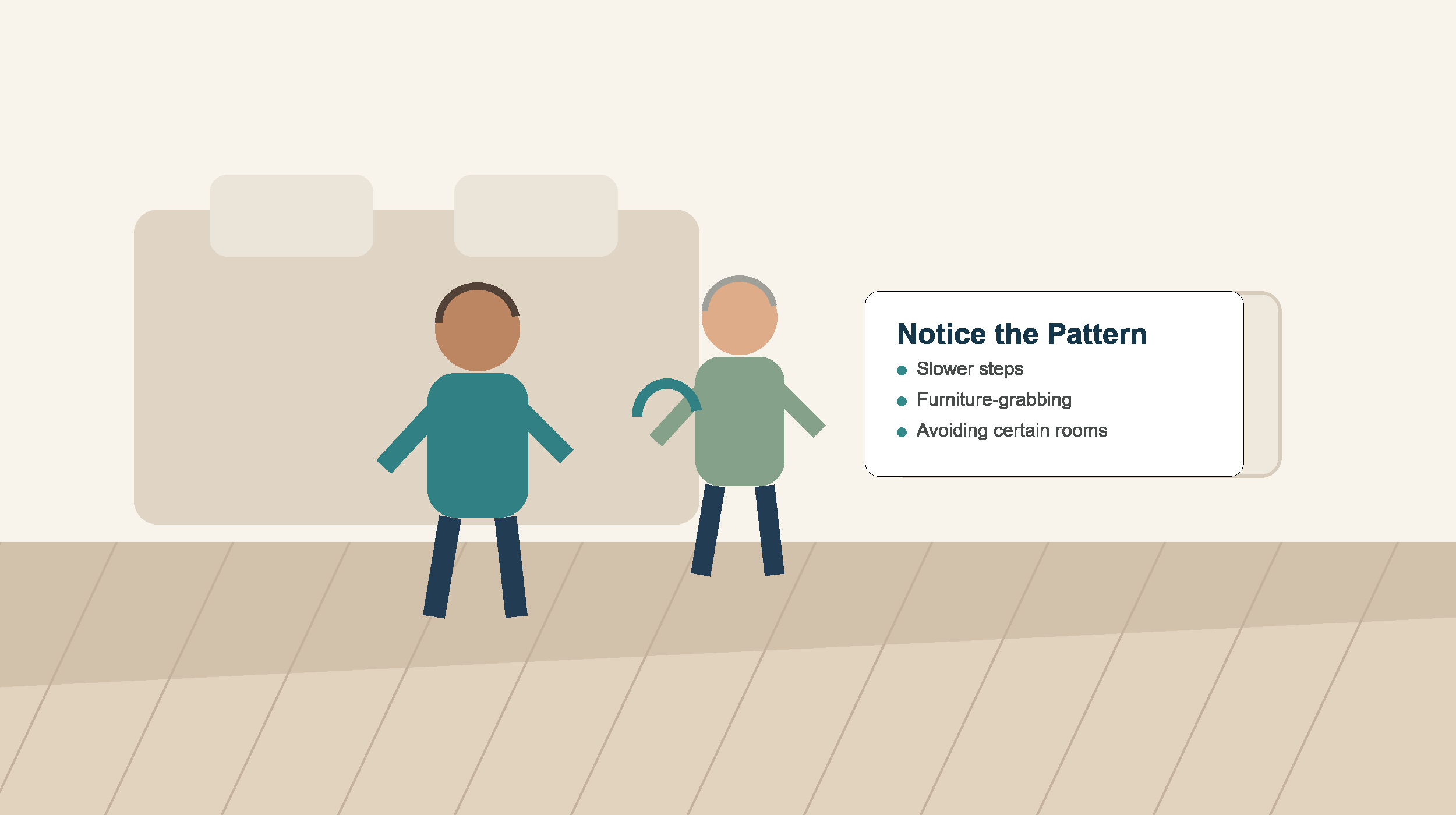
1. Look for Patterns, Not Just One Moment
One slow walk down the hallway may simply mean your loved one is tired. A repeated pattern tells you more. Try to notice when movement is hardest. Is it first thing in the morning? After dinner? On laundry day? When getting to the bathroom? When leaving for appointments?
This kind of observation helps you ask better questions without making your loved one feel watched or judged. You might say, "I noticed the hallway seems harder in the morning. Would it help if we looked at the setup together?" That feels very different from, "You are not safe anymore."
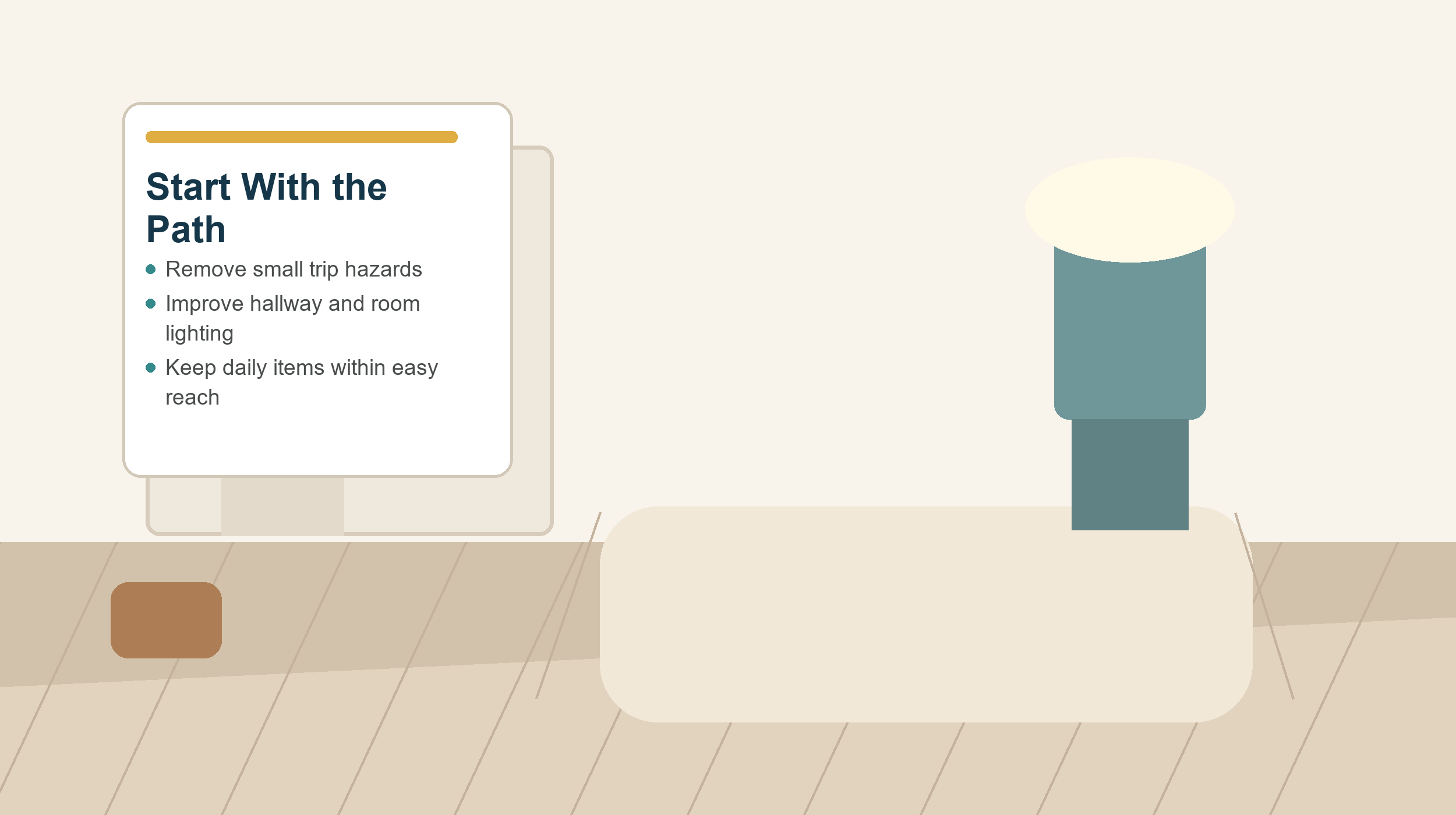
2. Start With the Everyday Pathways
Families often think about major home changes first. Sometimes those are needed, and a qualified professional can help evaluate that. But many useful starting points are simple and practical.
Clear the path between the bed and bathroom.
Move cords, loose rugs, shoes, baskets, and small furniture out of walking areas.
Improve lighting in hallways, bedrooms, bathrooms, and entryways.
Keep commonly used items within easy reach.
Make sure the phone, water, glasses, and daily essentials are not across the room.
These steps are not a guarantee. They are simply part of a more thoughtful home routine. If your loved one has had a fall, dizziness, weakness, medication changes, pain, confusion, or a sudden decline, encourage medical guidance from a doctor or other appropriate health professional.
3. Protect Dignity While Adding Support
Many older adults resist help because they are afraid support will feel like losing control. That is why the words you use matter. Instead of making the conversation about what your loved one can no longer do, frame it around keeping normal routines easier.
For example, you might say, "I want the house to work better for you," or "Let us make the morning routine a little easier." This approach keeps the focus on comfort, respect, and independence where possible.
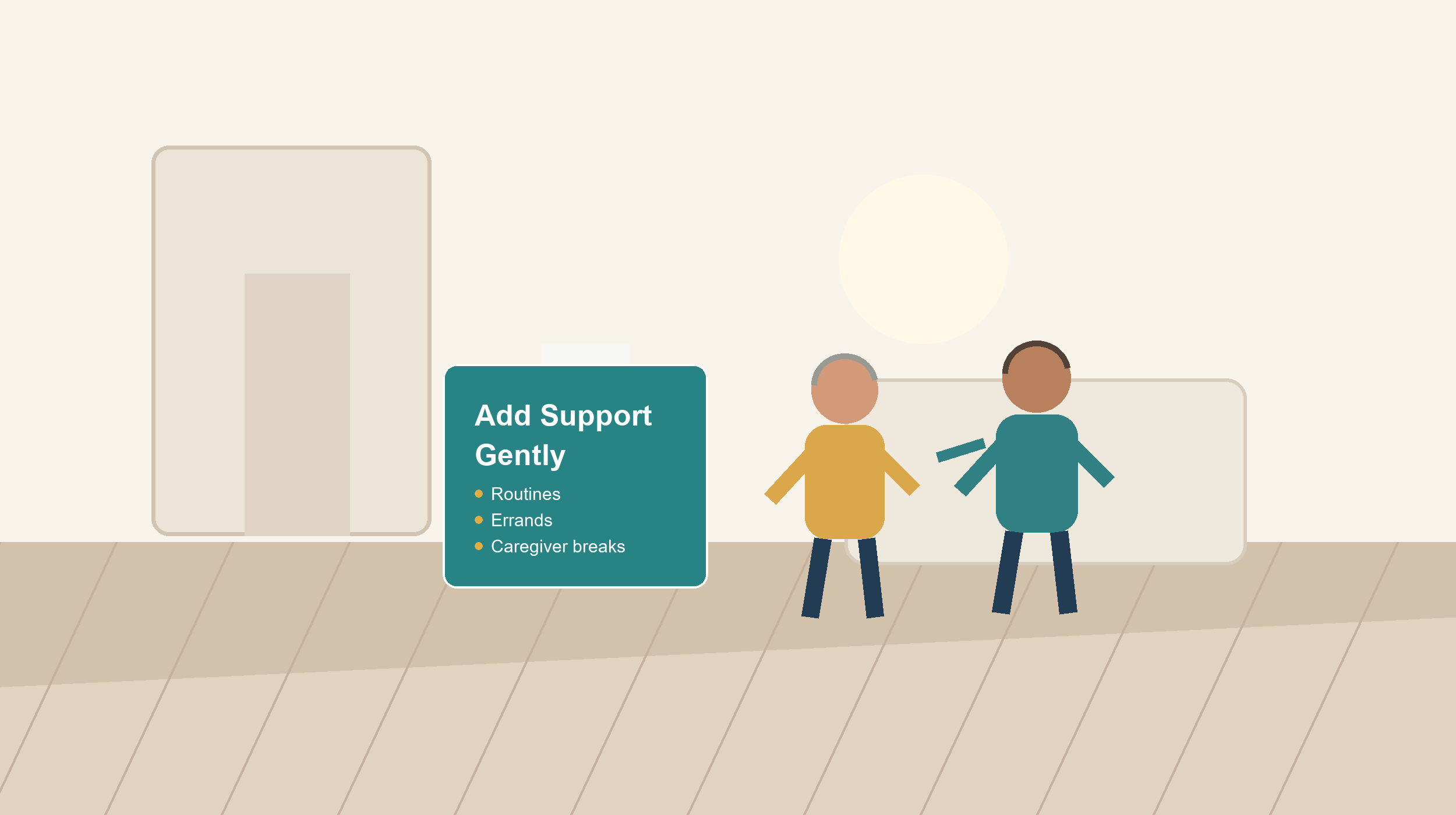
In-home care can also be introduced in a gradual, practical way. A caregiver may help with light support around the home, meal preparation, reminders, bathing and hygiene routines, mobility and transfers when arranged in the care plan, companionship, or escorted transportation. The exact support should match the person, the home, and the family situation.
4. Know When Family Help May Not Be Enough
Family caregivers are often doing more than they realize. You may be stopping by more often, calling several times a day, rearranging work, or worrying every time your loved one needs to get to the bathroom or leave for an appointment.
It may be time to consider outside support if movement changes are affecting basic routines, if your loved one is skipping activities because getting there feels hard, or if the family is relying on constant last-minute coverage. Support does not have to replace family involvement. It can give the family a steadier plan.
5. Make the Plan Local and Realistic
San Antonio families often balance work, distance, traffic, appointments, and extended family responsibilities. A care plan has to fit real life. That may mean a short shift a few days a week, help with a morning or evening routine, support after a return home from the hospital or rehab, or escorted transportation for appointments and errands.
Local resource planning can also be helpful. The Alamo Area Council of Governments lists Area Agency on Aging and caregiver-support resources for older adults and family caregivers in Bexar County and the surrounding Alamo region. Families can use community resources alongside private in-home care when appropriate.
When Should You Consider In-Home Support?
Consider a care conversation if your loved one wants to stay at home but needs more help moving through the day safely and comfortably. A free, no-obligation consultation with Promise Senior Solutions can help your family look at the home, talk through current routines, and explore a personalized care plan without pressure.
The right question is not, "Are things bad enough?" The better question is, "What support would make daily life clearer, calmer, and more manageable right now?"
Frequently Asked Questions
Is walking more slowly always a sign that my loved one needs home care?
No. Slower movement can happen for many reasons, and sudden or concerning changes should be discussed with a health professional. Home care may be worth considering when movement changes are affecting daily routines, safety confidence, or family caregiver strain.
Can in-home care prevent falls?
No service should promise fall prevention. In-home support can help families build safer daily routines, reduce clutter-related stress, provide reminders, assist with planned mobility support when appropriate, and help a loved one avoid rushing through tasks.
What is a good first step if I am worried about movement at home?
Start by observing where movement is hardest, reviewing common home hazards, and having a calm conversation with your loved one. If health symptoms, dizziness, pain, or a recent fall are involved, include the appropriate health professional. If daily routines are becoming too much for the family to manage alone, consider a care consultation.
You Do Not Have to Wait for a Crisis
Small changes at home can be the beginning of a better support plan. If walking around the house is becoming harder for someone you love, Promise Senior Solutions can help you talk through practical next steps for in-home care in San Antonio and surrounding areas.
Asking for help is not giving up. It is a way to protect dignity, support daily routines, and give your family a clearer path forward.