A practical guide for San Antonio families who are trying to understand what kind of help is available at home.
If you are starting to notice that your loved one needs more help at home, it can be hard to know what kind of care to ask for. You may hear terms like home care, home health, personal care, companion care, respite care, and transportation support. They can start to blur together, especially when your family is already tired or worried.
Promise Senior Solutions provides in-home senior care in San Antonio and surrounding areas. For many families, the first step is not making one big decision. It is understanding what non-medical home care can actually help with, what it does not replace, and how support can be shaped around your loved one's daily routine.
Short answer: what does non-medical home care help with?
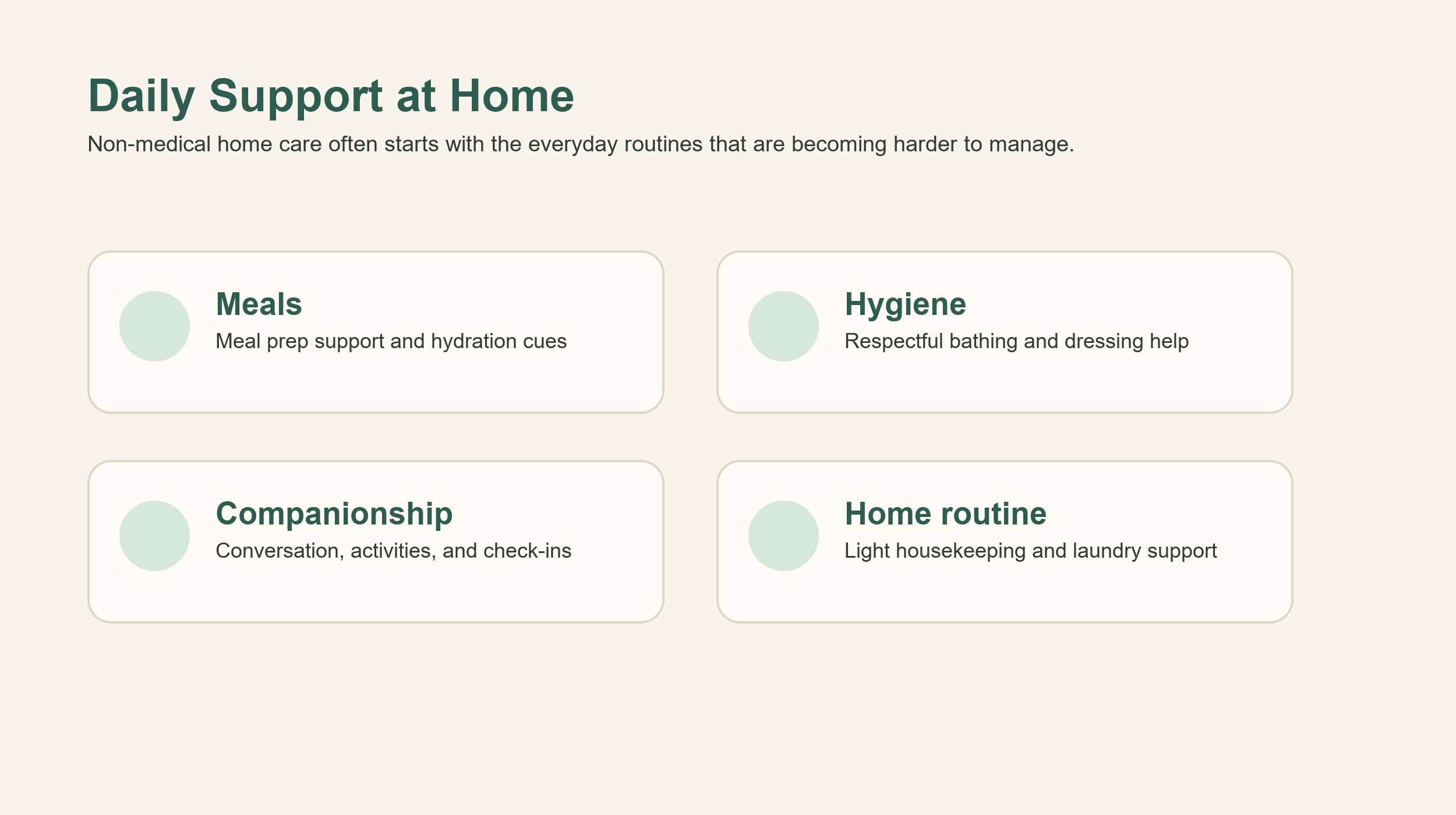
Non-medical home care helps older adults with everyday support at home, such as companionship, bathing and hygiene routines, meal preparation support, light housekeeping, medication reminders, mobility support, respite for family caregivers, and transportation help. It is not the same as skilled nursing or medical treatment, but it can make daily life feel more supported, organized, and manageable.
The National Institute on Aging explains that many older adults want to stay in their homes as they age, but families often need to plan around safety, getting around, and daily activities. That is where practical in-home support can become part of the care plan.
1. Help with daily routines
This may include support with things like:
getting the day started
simple meal preparation
light housekeeping
laundry
gentle reminders
safe movement around the home
keeping a regular routine
2. Companion care and emotional connection
Not every need is physical. Sometimes the concern is that your loved one is becoming quieter, less engaged, or more alone than they used to be.
Companion care can include conversation, shared activities, walks, hobbies, meal prep support, safety check-ins, and light support around the home. It should never be presented as a treatment for loneliness, depression, dementia, or any medical condition. But for many families, regular companionship can help a loved one feel more supported and less isolated in the normal rhythm of the week.
3. Bathing, dressing, and hygiene support
Personal care can be one of the hardest areas for families to talk about. A parent may resist help because bathing, dressing, and hygiene are private. A spouse may be exhausted but not want to embarrass the person they love. An adult child may notice changes but feel unsure how to bring it up.
Non-medical home care can include respectful bathing and hygiene support. The goal is not to take over someone's dignity. The goal is to provide gentle help when the routine has become unsafe, stressful, or too difficult to manage alone.
4. Respite care for the family caregiver
Sometimes the person who needs help most urgently is the family caregiver.
Caregiving can become a constant on-call role. You may be checking in before work, answering calls during the day, stopping by after dinner, managing appointments, and worrying overnight. Even when you love the person deeply, that level of responsibility can become difficult to sustain.
Respite care gives a family caregiver time to rest, run errands, go to appointments, sleep, spend time with other family members, or step away for a while. The CDC encourages caregivers to care for themselves, and respite is one way caregivers may be able to get a break from caregiving responsibilities.
At Promise Senior Solutions, respite care can include practical support such as meal preparation, medication reminders, light housekeeping, bathing and personal care, and mobility and transfers. It is not replacing the family. It is helping the family build a more sustainable plan.
5. Transportation and appointment support
For many older adults, getting to appointments, errands, or social outings becomes more stressful before it becomes impossible. A family member may be juggling work schedules. The older adult may feel nervous about driving, parking, walking in, or remembering appointment details.
Promise Senior Solutions offers transportation support, including escorted transportation and un-escorted transportation. Escorted transportation can include door-to-door help, mobility assistance, and support for appointments and errands with a caregiver at the client's side. Un-escorted transportation can be a fit when the person needs door-to-door help but does not need a caregiver to stay with them throughout the outing.
This is not emergency medical transport. It is practical support for planned appointments and outings when extra help would make the day easier to manage.
6. Dementia care and routine support
When memory changes are involved, families often need more than general help. They need patience, structure, and a caregiver who understands how to support calm routines.
Promise Senior Solutions offers specialized in-home dementia care in San Antonio. Caregivers are trained and certified in dementia care, and support follows a personalized care plan focused on safety, calm, and comfort in the familiarity of home.
It is important to keep the language realistic. Dementia care does not stop decline, reverse dementia, or cure memory loss. But the right support can help families create a steadier home routine and reduce some of the day-to-day confusion around care tasks.
7. Return-to-home and higher-support situations
Some families need help during a transition. Maybe a loved one is returning home after a hospital stay, rehab stay, or another change in care. Maybe the family is managing more hands-on needs, such as bed bound care, repositioning, hygiene support, linen changes, or transfers.
Promise Senior Solutions offers Return To Home Care and Bed Bound Care as specialty care services. These services should be understood as trusted in-home support during a transition or higher-support home-care situation. They do not replace physician instructions, skilled nursing, hospice, rehab, or medical care unless those services are separately arranged with the appropriate provider.
How do you know which kind of help fits?
Helpful questions include:
What parts of the day are becoming hardest?
Is the concern safety, hygiene, meals, companionship, transportation, caregiver burnout, or memory changes?
Which tasks is the family already covering?
Where is the current plan putting too much pressure on one person?
Would a few hours of support each week help, or is more consistent care needed?
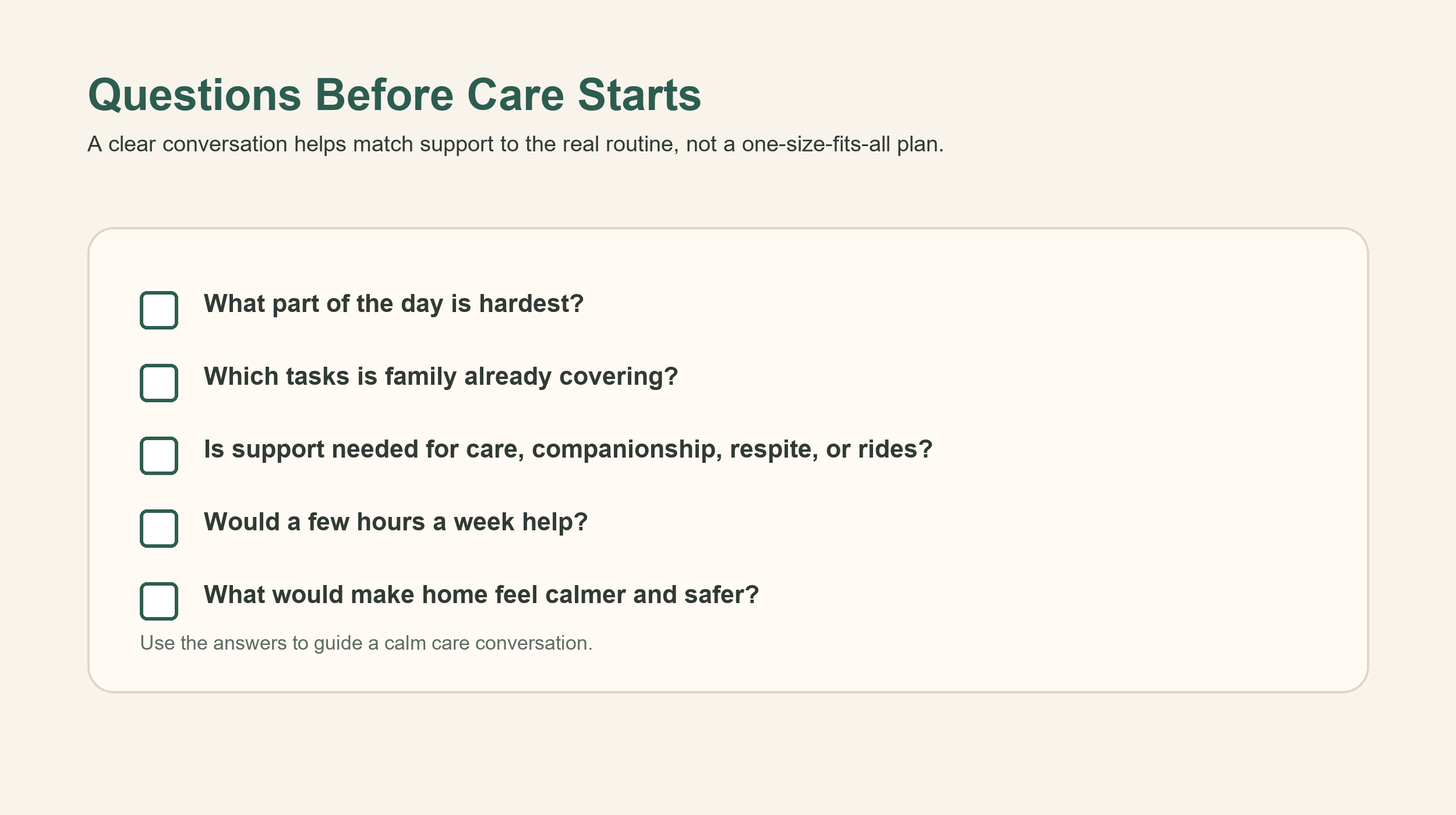
Those answers can guide a practical care conversation. Promise Senior Solutions offers a free, no-obligation consultation to evaluate the home and create a care plan. That consultation can help your family talk through what support may fit without assuming every family needs the same plan.
FAQ
Is non-medical home care the same as home health care?
No. Non-medical home care focuses on everyday support such as personal care, companionship, respite, light household help, reminders, and transportation. Home health care usually refers to medical or skilled services arranged through licensed health professionals. If your loved one needs medical treatment, nursing care, wound care, therapy, or clinical monitoring, ask the appropriate medical provider what type of care is required.
Can home care help if my loved one only needs a little support?
Yes, in many cases. Families often start with a few practical needs, such as meals, companionship, bathing support, transportation, or caregiver relief. The care plan can be shaped around the actual routine instead of forcing a one-size-fits-all approach.
When should a San Antonio family consider in-home care?
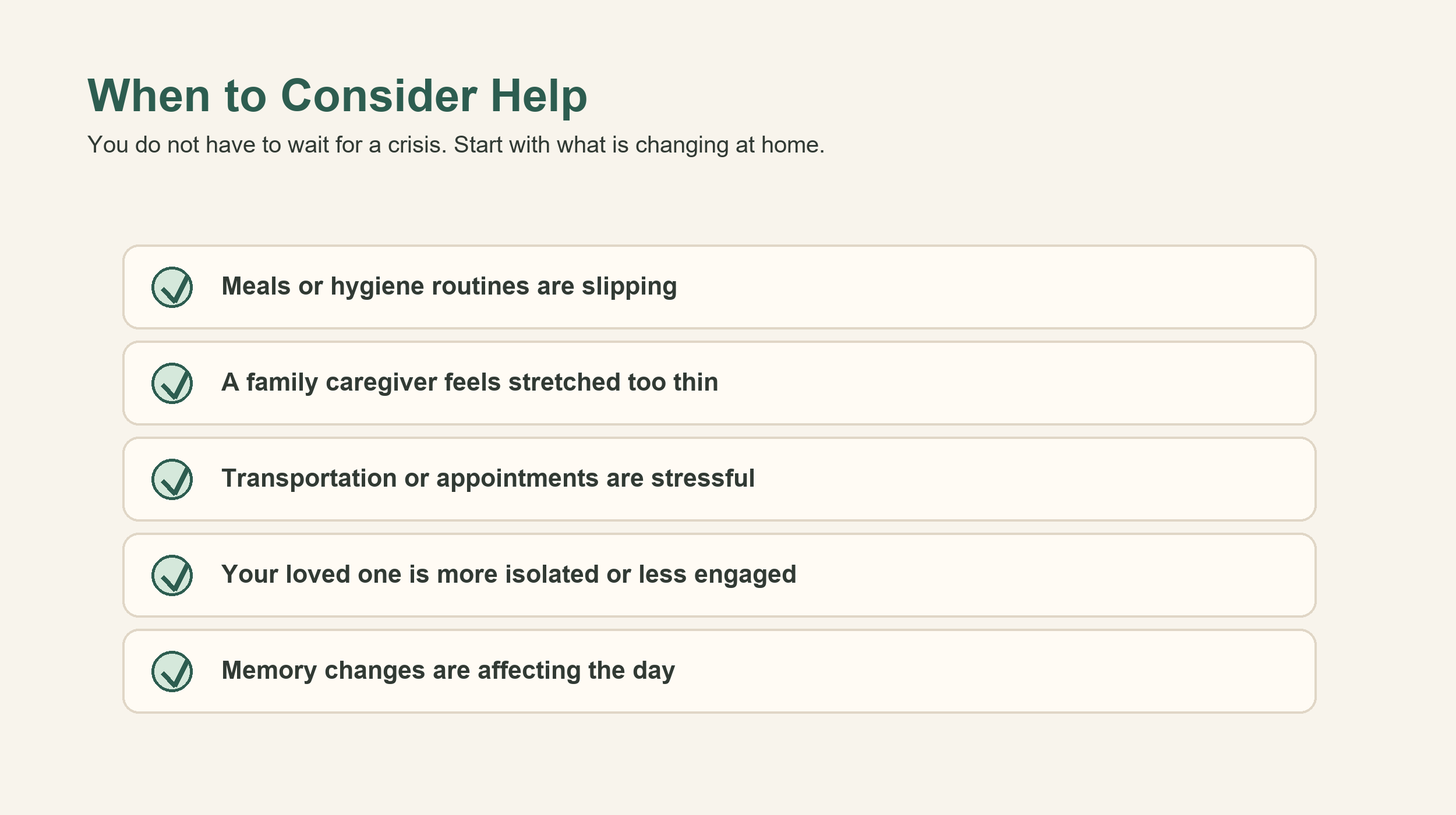
Consider in-home care when daily routines are becoming harder, the family caregiver is stretched too thin, your loved one is more isolated, hygiene or meals are slipping, memory changes are affecting the day, or transportation has become stressful. You do not have to wait for a crisis to ask what support may fit.
Getting started is easier than you think
Asking about home care does not mean you are giving up. It means you are looking for a better way to support someone you love.
If your family is trying to understand what help is available at home, Promise Senior Solutions can talk with you about in-home senior care options in San Antonio and surrounding areas. A free, no-obligation consultation can help you sort through the daily routine, ask better questions, and decide what kind of support may make sense for your loved one.